Learning Together, Looking Ahead: Cabinet Retreat Focuses on Mission and the Future
/
Rev. Amanda Banda
Director of Communications, Rio Texas Conference
What does it look like for conference leadership to move beyond responding to the needs of today and begin preparing faithfully for the church of tomorrow?
That question was at the center of an August gathering that brought together the Cabinets of the Rio Texas and Texas Annual Conferences for three days of shared learning in San Antonio, followed by two additional days of reflection and planning for the Rio Texas Cabinet.
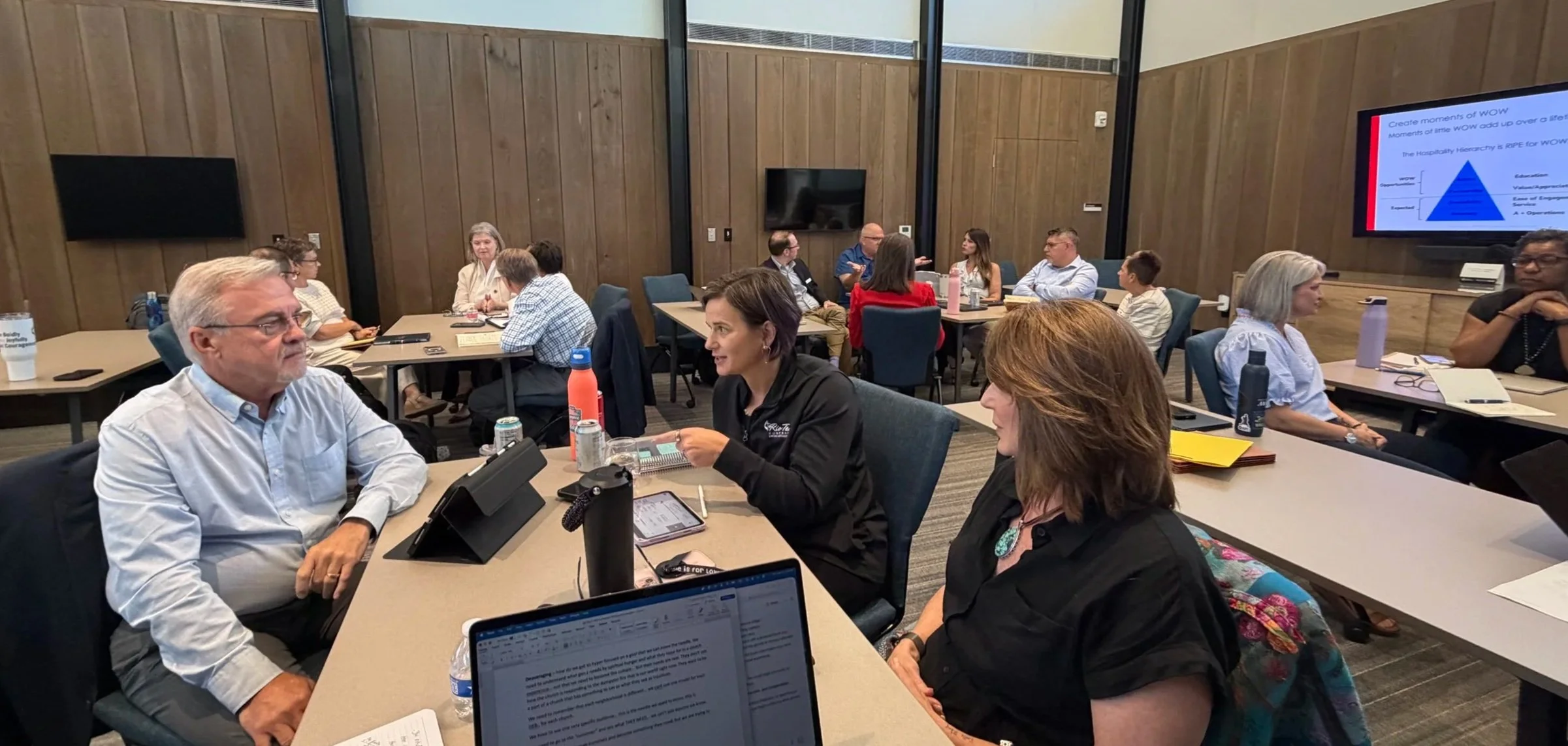
Leaders from the Rio Texas and Texas Annual Conference Cabinets gathered in San Antonio Aug. 24–28 for shared learning, conversation and strategic reflection.
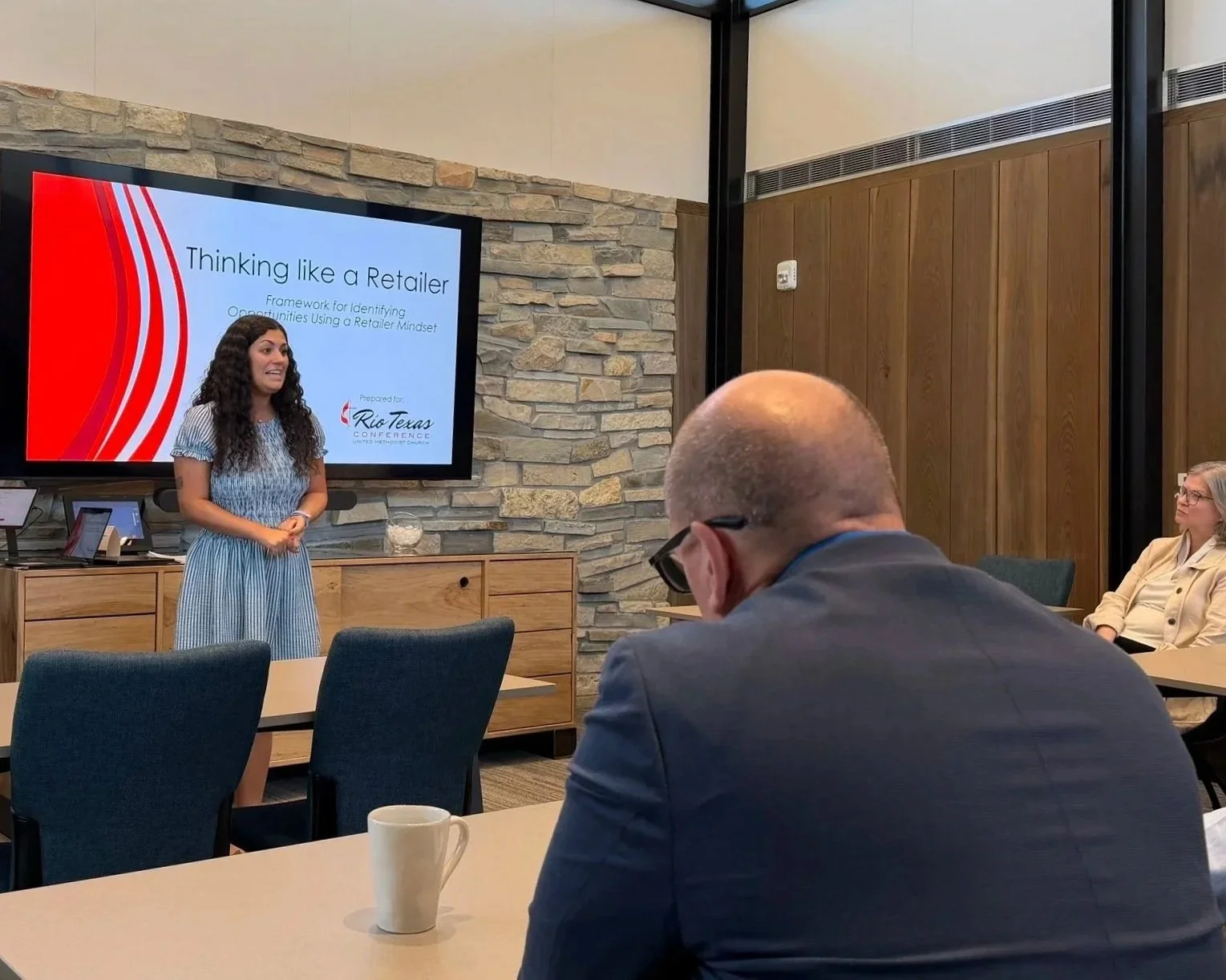
During a session with the H. E. Butt Foundation, Cabinet members explored how lessons from other organizations might help conference leaders think more clearly about purpose, strategy and the communities they serve.
The August 24–28 retreat included conversations with the H. E. Butt Foundation, H.E. B., Methodist Healthcare Ministries, and Wespath, along with opportunities for the two Cabinets to learn from one another and consider how lessons from outside the Church might strengthen their own leadership. The Cabinets also participated in a CliftonStrengths exercise to better understand the gifts each leader brings to their shared work.
For Bishop Cynthia Fierro Harvey, several ideas from those conversations have continued to shape the weeks that followed.
One came from a session with the H. E. Butt Foundation and H.E.B that challenged leaders to identify their organization's “gross” — the central outcome around which everything else is organized. For a business, that answer may involve profit or growth. For the Church, the conversation led Rio Texas leaders back to something much more foundational: discipleship and transformation.
The mission of The United Methodist Church is “to make disciples of Jesus Christ for the transformation of the world.” During the days that followed, Rio Texas leaders began asking what that mission means specifically for the work of a conference Cabinet.
How do conference leaders deploy people and resources in ways that help local churches make disciples? How do they know whether the conference's work is helping congregations engage their communities? And how should those questions shape decisions about where time, attention, and resources are invested?
The retreat emphasized the importance of understanding context rather than assuming the same approach works everywhere. Bishop Harvey has repeatedly returned to an example from H-E-B: stores in different communities do not necessarily carry the same products because the people and neighborhoods around them are different. Ministry contexts are different, too.
“What’s needed in Bexar County might not be needed in Starr County,” leaders heard during their time with Methodist Healthcare Ministries (MHM), which serves communities across South Texas and intentionally adapts its work to local needs.
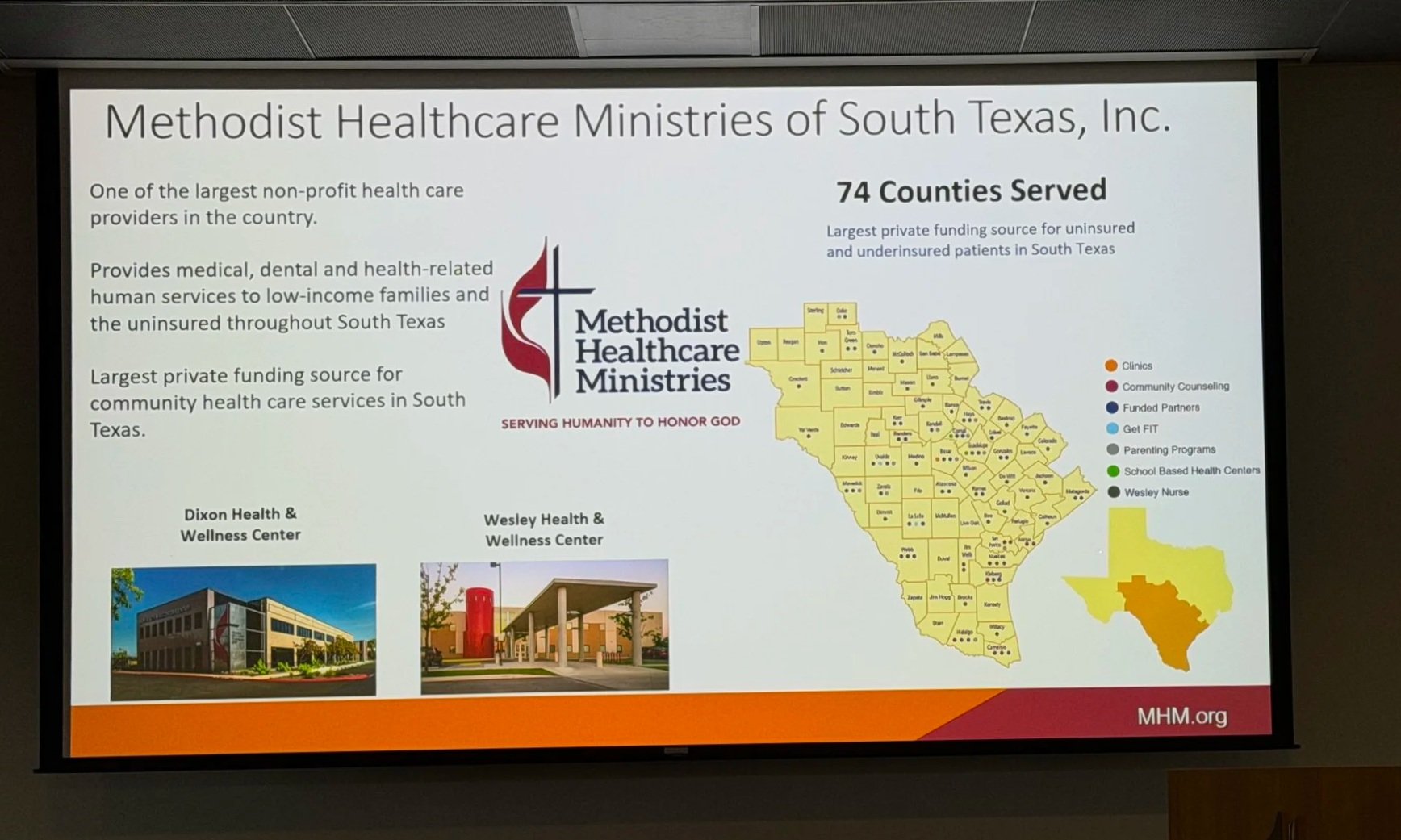
Methodist Healthcare Ministries shared how its strategy adapts across the 74 counties it serves, helping Cabinet members consider how local context can shape ministry and decision-making.
That learning prompted conversations about how the conference can listen more closely to communities, understand changing demographics, and recognize opportunities that may not be visible from inside a church building.
Another idea from MHM that stayed with the Cabinet was the distinction between working “upstream” and “downstream.” Much of the Church's ministry responds faithfully to immediate needs. But leaders also wrestled with what it means to look further upstream. What conditions are creating those needs? What decisions made today could strengthen a church or community several years from now? Where might early investment prevent a future crisis?
Methodist Healthcare Ministries demonstrated that approach through its own strategy, which looks beyond immediate services toward the conditions that allow people and communities to thrive.
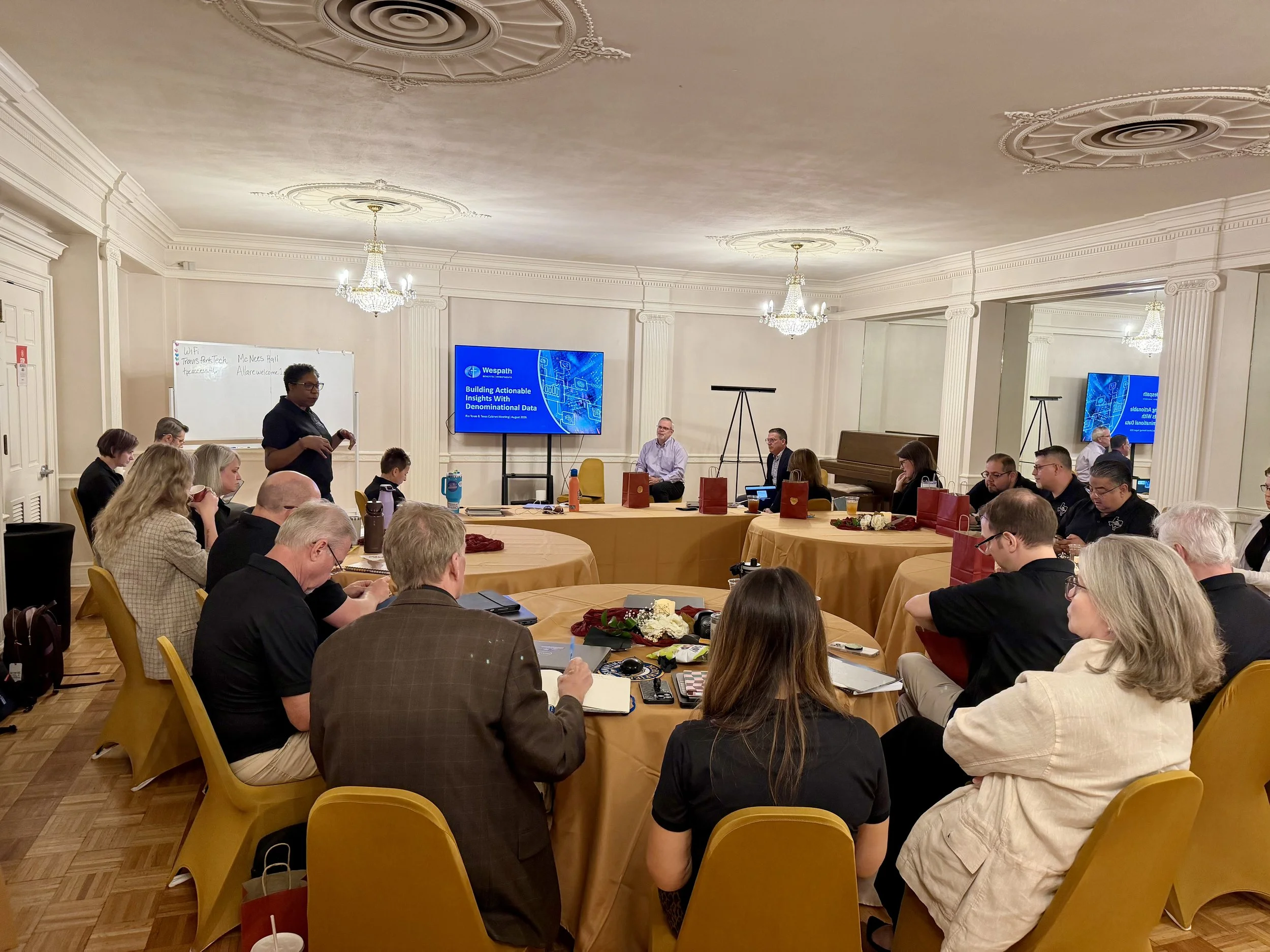
Wespath shared how data can help conference leaders identify patterns in congregational health.
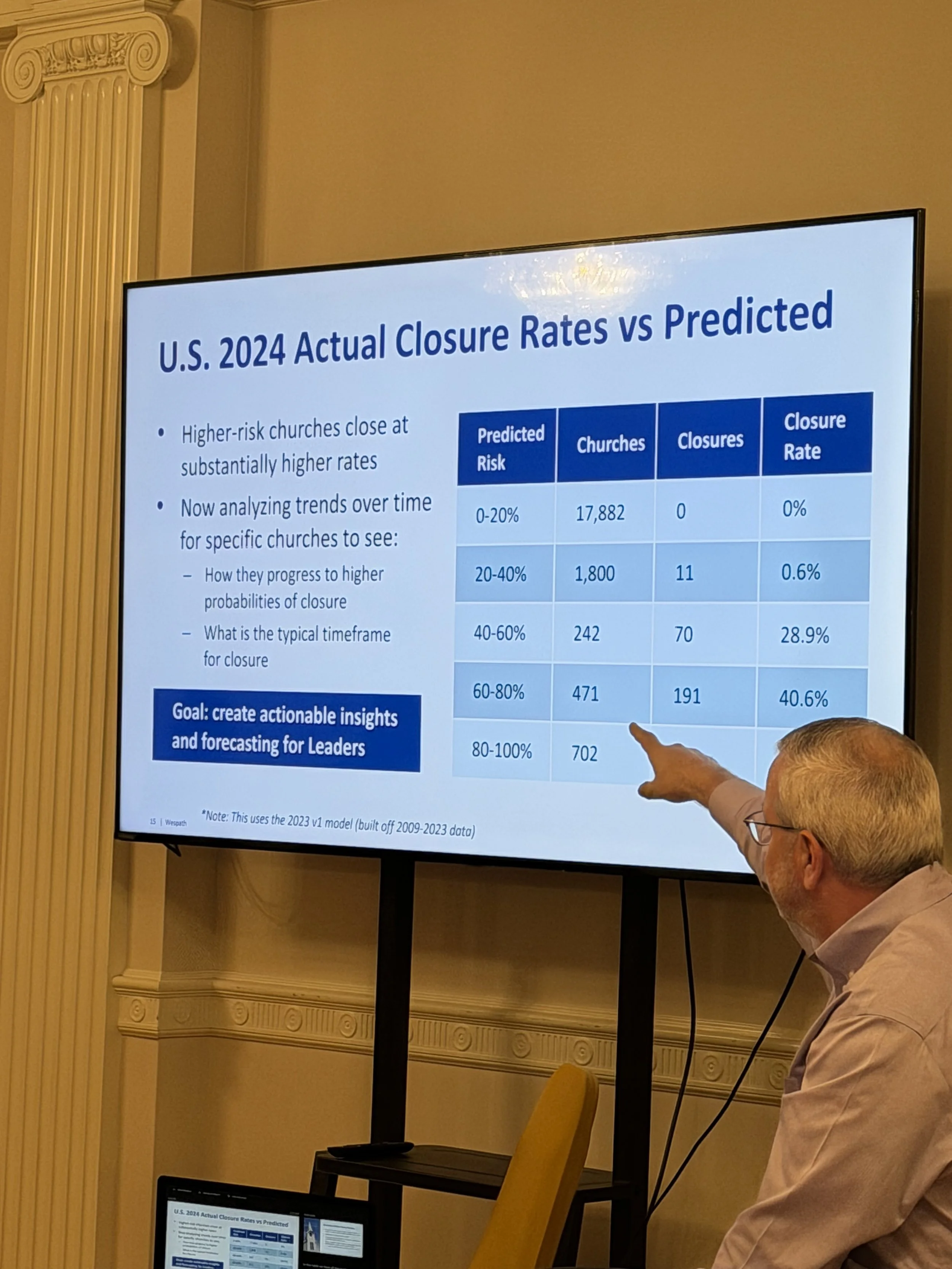
Wespath research explored factors connected to congregational vulnerability and church closures.
Wespath brought another lens to the conversation by demonstrating how data can help conference leaders identify patterns and better understand the health of congregations before they reach a point of crisis.
Using more than a decade of United Methodist Church data, Wespath has studied factors connected to church closures and congregational vulnerability. Some of the findings surprised leaders. In one model, for example, a significant decline in female membership over two years was the strongest predictor of a congregation’s likelihood of closing. Changes in ministry engagement, worship attendance, baptisms, and youth participation also emerged as indicators.
The findings encouraged leaders to consider how data might help them ask better questions earlier. What changes might signal that a congregation needs additional support? What can be learned from churches that are thriving? And how might leaders recognize both vulnerability and vitality earlier?
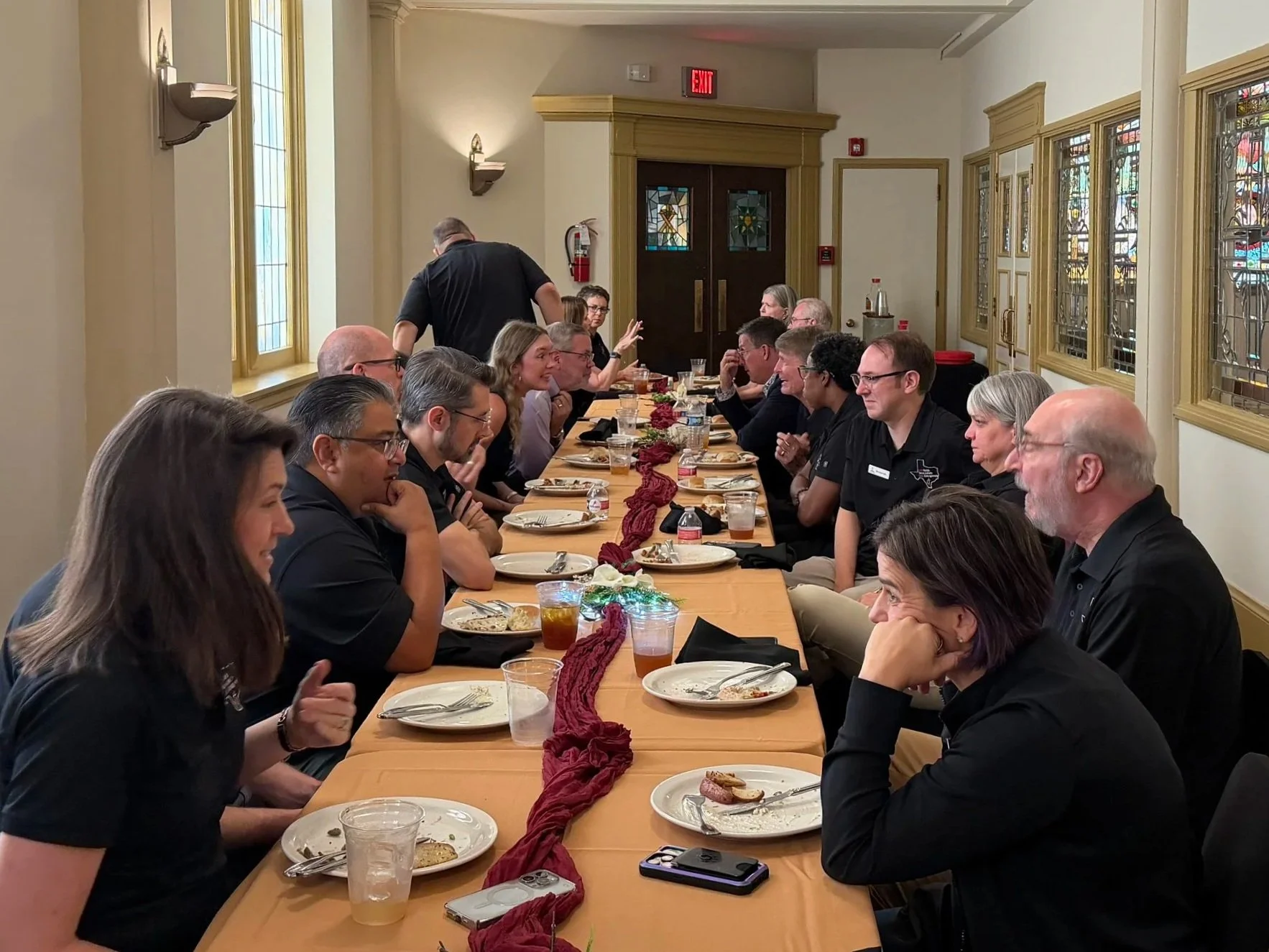
Leaders from the Rio Texas and Texas Annual Conference Cabinets share lunch and conversation at Travis Park United Methodist Church.
Wespath is now exploring that second question more deeply by looking beyond church closure toward congregational vitality. Its developing framework includes not only membership and worship attendance, but measures related to faith formation, community and missional engagement, lay leadership, digital engagement, partnerships, demographics, financial health, and discipleship.
The presentation reinforced a question already emerging throughout the retreat: How does the Church understand vitality?
Worship attendance, membership, and finances remain useful pieces of information, but Bishop Harvey has challenged leaders to consider whether those measures alone tell the whole story. Where is a congregation engaging its neighbors? Who is participating in the mission of the Church even if they are not yet sitting in a sanctuary on Sunday morning? How are lives and communities being changed?
As the joint portion of the retreat concluded, both Cabinets continued their work at Travis Park United Methodist Church, whose hospitality provided a gathering place for the retreat’s final three days. Working within their respective Cabinets, leaders spent time in what they described as “balcony work,” stepping back from immediate concerns to consider the larger picture and how the conference’s work can support local churches in carrying out their mission.
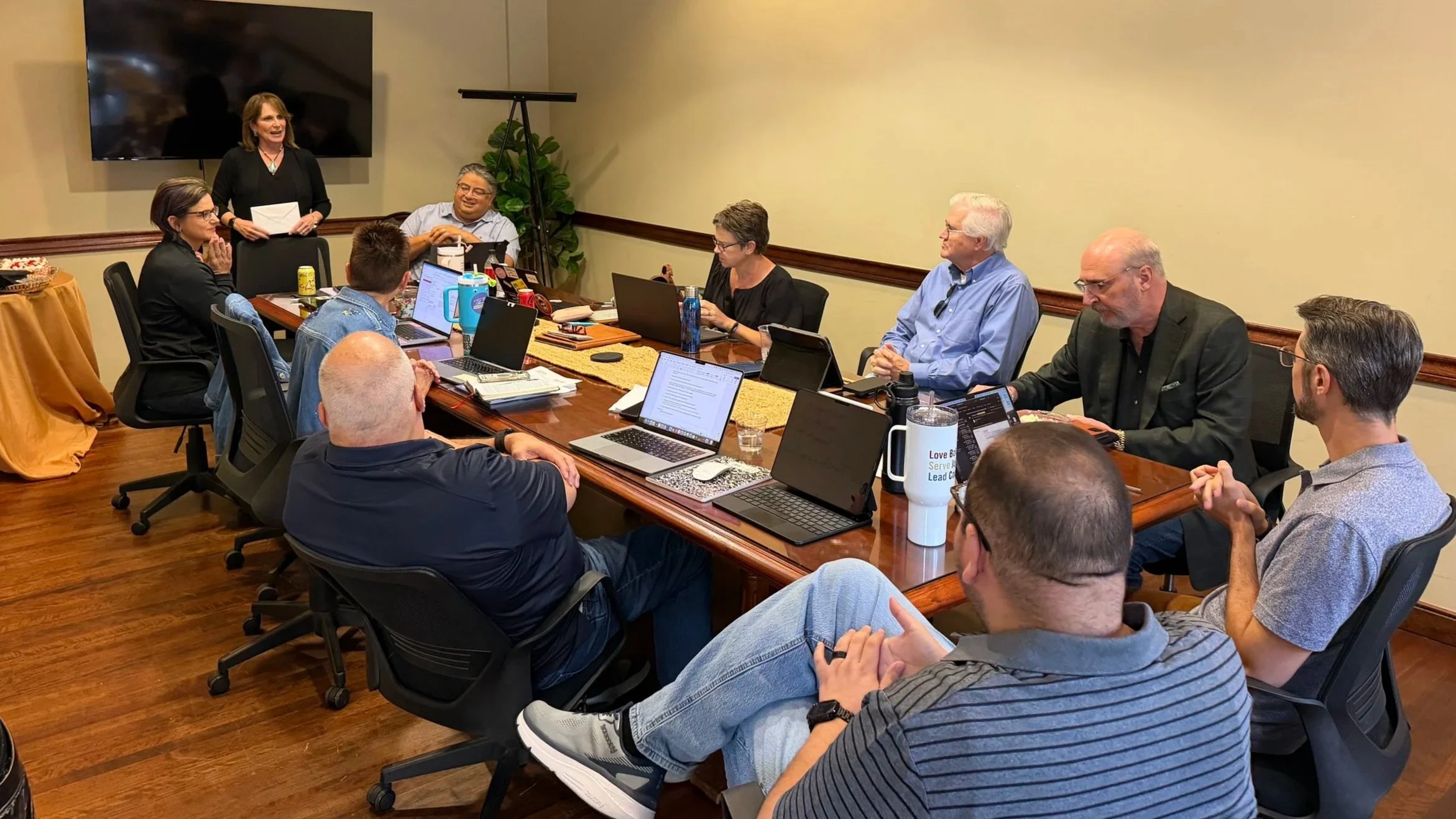
Following three days of shared learning with the Texas Annual Conference, the Rio Texas Cabinet spent additional time reflecting on what those lessons could mean for the conference's mission and priorities.
Travis Park United Methodist Church offered a warm welcome and hospitality as conference leaders gathered there for the final three days of the retreat.
Out of those conversations, some common language began to emerge. The Cabinet identified discipleship and transformation as the purpose at the center of its work and described its function as deploying leaders and resources while tending to the connection. As leaders considered how to strengthen the conference's strategic priorities in the year ahead, three areas began to take shape as a framework for that work: building bridges with neighbors, building trust through relationships, and nurturing healthy, equipped leaders.
While the language is still being developed, the direction is becoming clearer. Rather than beginning with programs or initiatives, the Cabinet is beginning with purpose and asking how the conference can best equip and support the people carrying out that mission across Rio Texas.
That clarity also creates room to listen, learn, and adapt. New approaches can be tried and refined as leaders better understand what is working, what communities need, and where God may be opening new possibilities.
For Bishop Harvey, this season also offers Rio Texas an opportunity to look further ahead. After years marked by unification, a pandemic, denominational disruption, and disaffiliation, she told clergy that the conference is beginning to move beyond simply responding to the next immediate challenge. The work now includes asking what to sustain, what may need to change, where new opportunities are emerging, and how the conference can faithfully steward the people, property, and financial resources entrusted to it.
The questions ahead are not only about what the conference should do differently, but about where God may already be at work. Where are new possibilities emerging in our churches and communities? Where are people finding connection, belonging, and transformation? And what might we discover if we are willing to listen closely to our neighbors and look beyond the ways ministry has always been done?
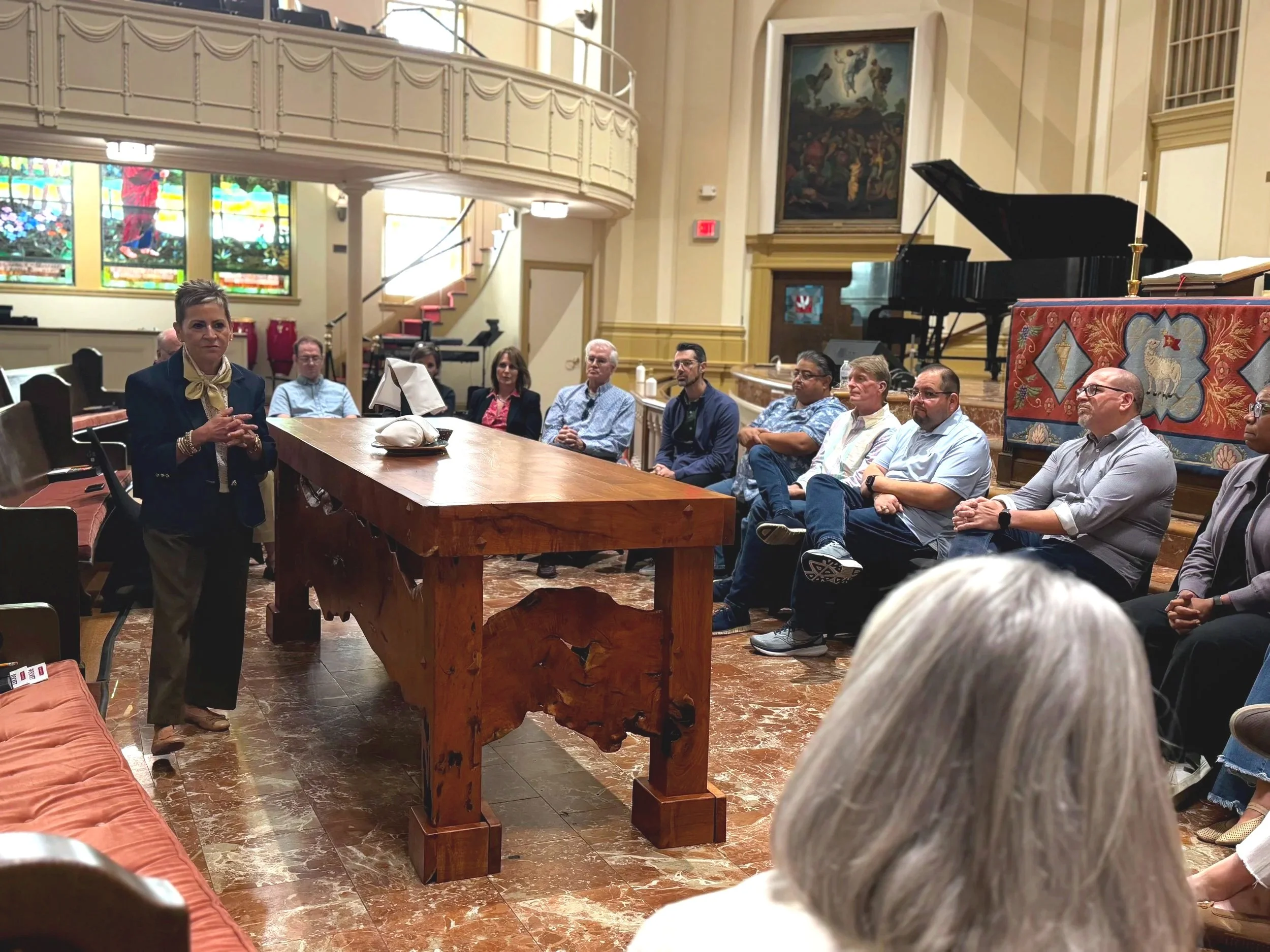
The Rio Texas Cabinet gathers around the Communion table, grounding the work ahead in the shared mission and connection of the Church.
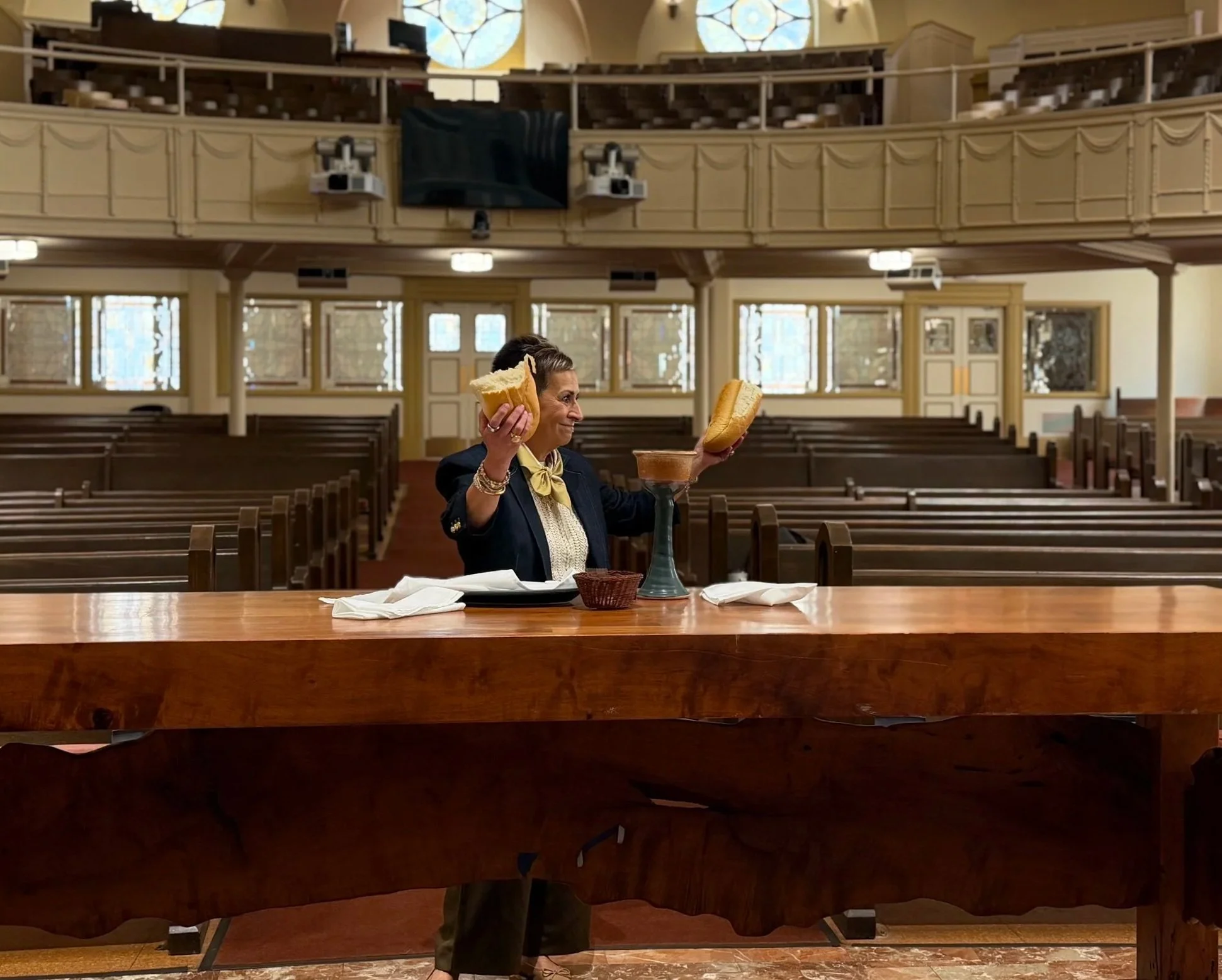
Bishop Cynthia Fierro Harvey leads the Rio Texas Cabinet in Holy Communion as the retreat draws to a close.
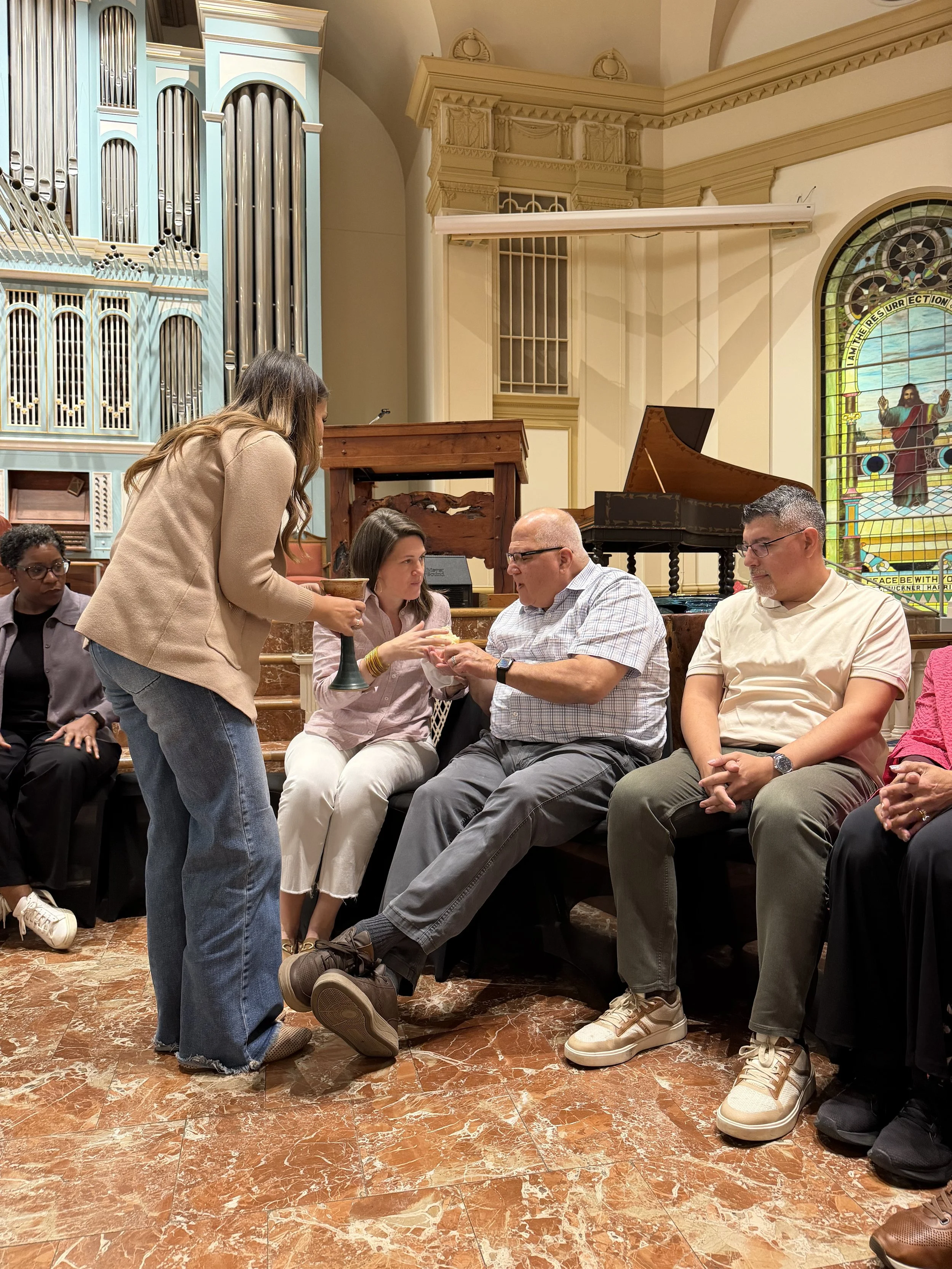
Cabinet members share in the bread and cup during closing worship at Travis Park United Methodist Church.
The answers will look different across Rio Texas. A congregation in a growing suburb will face different opportunities than a church that has served a rural community for generations. But across those different contexts, the mission remains the same: to make disciples of Jesus Christ for the transformation of the world.
The work ahead will require curiosity, courage, and a willingness to learn. It will mean building bridges with our neighbors, strengthening relationships and trust, equipping healthy leaders, and faithfully tending to the connection we share.
And as Rio Texas looks ahead, perhaps the invitation is not only to ask what comes next, but to pay attention to where God is already moving and have the courage to join in.