Stay Awake. Be Ready. — An Advent Devotional by Katie Myers
/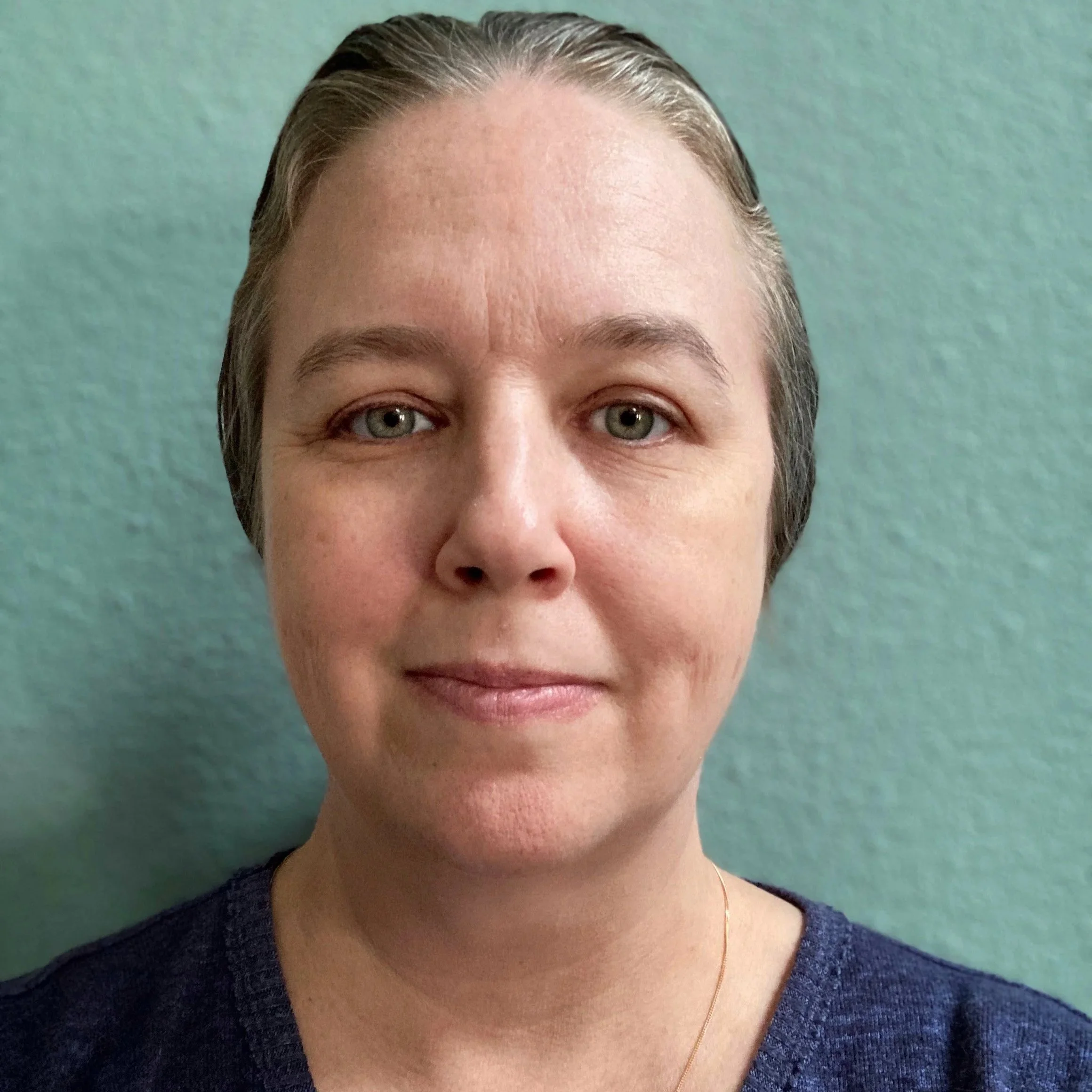
Katie Myers
Interfaith Welcome Coalition, Board Chair; Laurel Heights UMC, Director of Youth Family Ministries
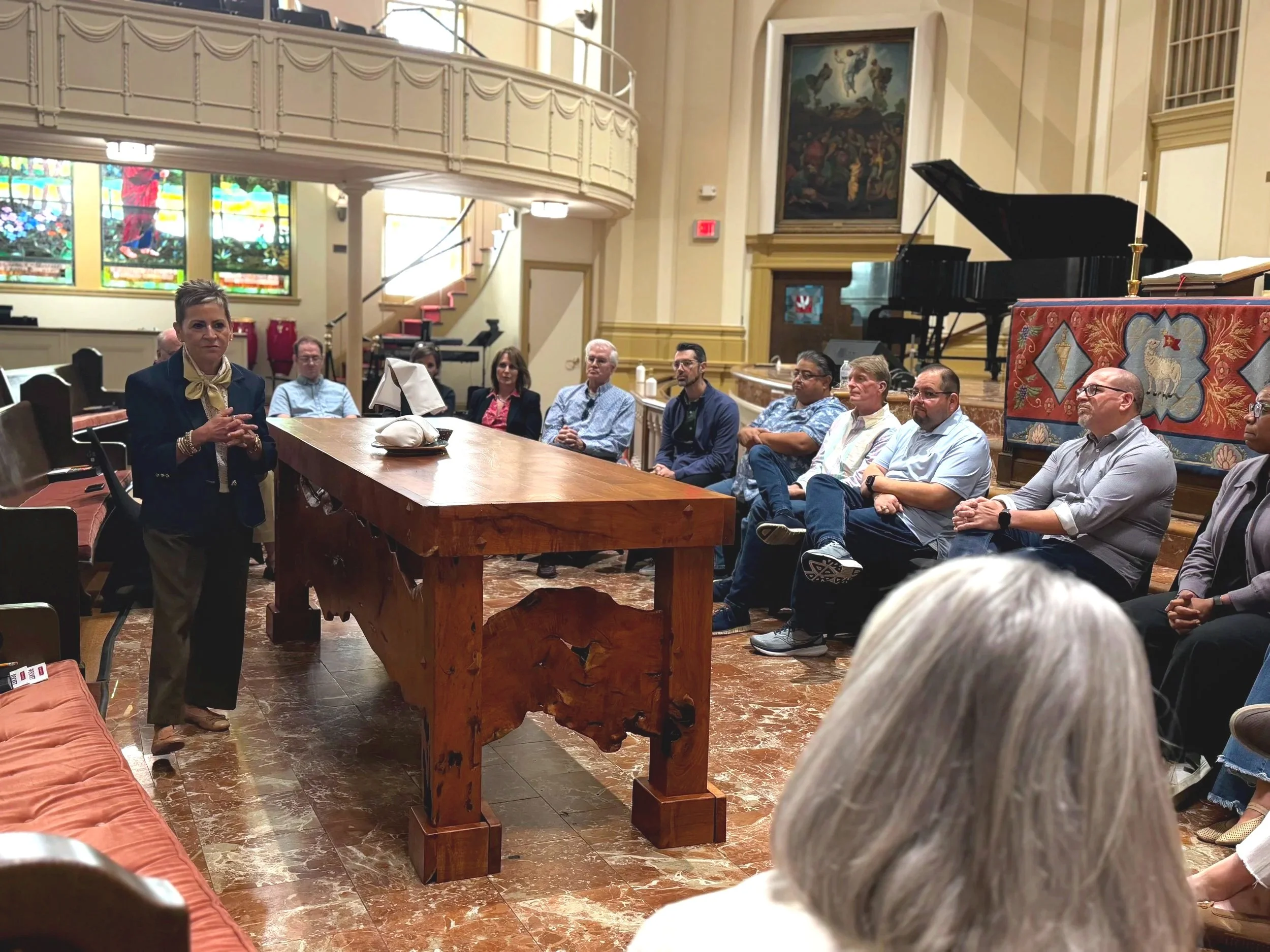
During the Rio Texas Cabinet December meeting, Katie Myers offered a profound Advent devotion rooted in Matthew 24 and in the lived experiences of immigrant families across South Texas. We share her devotional with gratitude, trusting her words will speak hope, courage, and clarity to our churches and communities this Advent season.
Oscar is a young Puerto Rican man who grew up here in San Antonio. He’s newly married to a young woman from Venezuela. They met working together at his family’s business. They have a baby who’s coming up on his first birthday. Her entire family came to the US from Venezuela about four years ago. They had TPS and have been working with an attorney on an asylum case. She’s in the midst of adjusting her status because of their marriage. Her father has an ICE check-in coming up the next day and the family is sick with worry about what is going to happen.
We talk for awhile on the phone the night before about what to expect. We also talk about the importance of being prepared and having frank conversations as a family about what that preparation looks like for them. He tells me that they left because his father in law had run afoul of the Venezuelan military and was terrified of being sent back. I tell him to be sure to let his father in law know that he should loudly and clearly declare his fear of being returned to Venezuela to anyone and everyone he encounters in the immigration system. His manifest fear might lead the government to concede that he can’t be returned to Venezuela. Even so I warn him, it’s not uncommon for them to send people to other countries instead – like Mexico.
The next day early in the morning, he goes with his father-in-law to the nondescript building in a light industrial area in NE San Antonio for his check-in. Around midday, the volunteer who is with them texts me to let me know that they are still waiting and she has a meeting to get to. I go and swap off with her. As we sit, a few people go in and come back out. Some are relieved that they have only gotten a grillete or need to go to another office to have another type of monitoring device issued to them. A few family members come out alone and tearful. The mood of those waiting outside to be called turns increasingly anxious. Waiting this long is very unusual. People quietly talk amongst themselves or sidle over to people who have come back out. What was going on? What did they see? Did anyone know anything? There’s rampant speculation. A large white bus pulls up full of
people and backs into the driveway. Murmurs go around the group. More waiting. More watching. More wondering.
Finally, someone comes out with a big stack of papers and calls for all the remaining appointments – all men. I’ve been sitting behind a couple of them – strangers to each other before today. As they stand, they straighten their shirts and collect their folders of paperwork and go into the building. A few wives and mothers pace around anxiously along with a man whose wife and baby daughter have been inside for hours. The young man I’m with says, “I really didn’t want him to come today.” People anxiously check their phones for a text update from their loved one inside the building. The bus from earlier emerges again. This time a couple of the men sitting on that side of the bus hold up their handcuffed hands to the widows. A few people rush over, trying to see who is inside, trying in vain to decipher the gestures and messages that the men are trying to share. The anxiety ratchets up another 5 notches.
The ICE outdoor staffers herd us together into an area of seating. I think at this point that they’re moving us all together so they can talk to everyone at once. I’ve seen them do this before. It turns out they’re just putting away all the other chairs. I’m not sure who hears first but there are cries and suddenly everyone knows that no one else is coming out today – including the father-in-law of the young man I’ve been waiting with. A young woman next to me cries out in English, “After 4 years! This??” She leaps out of her seat, “Pierro! Not Pierro!” I gesture for her to come sit down next to me – trying to be consoling. She sits for just a moment but then she can’t be still any longer. Everyone is making choked and quiet phone calls. One woman is on speakerphone with the automated menu system of her immigration attorney. People walk to their cars or down the sidewalk and then come back. You can’t leave yet. We’re all waiting for an ICE official to come back out with their personal effects. It doesn’t take long this time. A man emerges with a handful of clear plastic sealed bags containing cell phones and a few other items. He calls up the waiting family members one at a time – giving them the bag and a handout with a QR code to use to look your relative up in the system to find out where they’ve been sent.
Half a dozen of us stand around – not ready to say goodbye – even though we don’t even know each other’s names. I pass my phone number that I hastily scribbled on part of an old check register in the bottom of my purse to a couple of people. The young man hugs me and thanks me for being there. I tell him how sorry I am that it turned out this way. I tell him to call me if he needs help finding his father in law. As I walk away I see the young woman from earlier sobbing in her car. I tap on the window. She rolls it down and I tell her how sorry I am. She tells me that she and Pierro are from Venezuela and came more than 4 years ago. What can I say to her except that it’s unjust what is happening to them. She tells me she’s driving back to Austin. We joke a little about driving on 35. Then we say goodbye and I go back to my car and drive home. I don’t know what has happened to any of the people I met there that day.
The Gospel reading for the First Sunday of Advent is Matthew 24:36-44. Probably many of you heard this just the other day.
"But about that day and hour no one knows, neither the angels of heaven, nor the Son, but only the Father.
For as the days of Noah were, so will be the coming of the Son of Man.
For as in the days before the flood they were eating and drinking, marrying and giving in marriage, until the day Noah entered the ark,
and they knew nothing until the flood came and swept them all away, so, too, will be the coming of the Son of Man.
Then two will be in the field; one will be taken, and one will be left.
Two women will be grinding meal together; one will be taken, and one will be left.
Keep awake, therefore, for you do not know on what day your Lord is coming.
But understand this: if the owner of the house had known in what part of the night the thief was coming, he would have stayed awake and would not have let his house be broken into.
Therefore you also must be ready, for the Son of Man is coming at an hour you do not expect.”
It’s difficult maybe even impossible for me now to hear these words: “one will be taken, and one will be left” – without thinking of the people that I know who have lived this reality over the past year.
Trinidad, Alex, Alfonso, Jefferson, Pierro, Yusmel, Yuliana and her children, Yoselin and her children – all detained when they went to the San Antonio ICE Office for their regularly scheduled check-ins. They left behind Stella, Maria, Yaelin, Jessica, Oscar, Jorge, Jose and others both here in the US and back home. When I’ve gone to visit them in detention, one of the things that weighs most heavily on them is what will happen to their families that depend on them while they are in detention and when they are deported. ICE seems to deliberately target the bread winners of a family to destabilize and demoralize immigrant families, ultimately hoping they will succumb to the pressure and leave the US.
For those not yet ensnared in current immigration enforcement efforts – stay awake, keep watch, be ready are a way of life. Everyday tasks are weighed against the risk of encountering the police or ICE. Will you be stopped in the grocery store parking lot or after dropping your child off at school? Pulled over for a broken taillight or for riding a bicycle the wrong way down a street? Swept up at a church service or on the way to grab late night tacos from a food truck? Constant watchfulness, constant alertness, constant anxiety and stress.
Readiness is something that those of us working with immigrant communities have tried to encourage. Simple tasks like making extra copies of important papers and giving them to someone you trust. Making sure any US-born children have US passports and copies of their birth certificates. Apps for your phone that can quickly send out a message to predefined contacts in the event of your imminent arrest. Hard conversations like do you want your US citizen children to stay in the US if you are deported and if so, with who?
Be ready, stay awake!
But the reality is that people don’t want to have these readiness conversations. They don’t really want to take these steps. It’s too devastating to imagine the possibility of making determinations about your child’s future guardian. The reality is that no one can live in a state of constant vigilance. Things happen and everyone shrinks inward for a while but eventually life must go on. And going about living your life is an act of resistance to the fear that our country’s current immigration policy is designed to create. Continuing to build your life here in the US is a way to push back against the narrative that you don’t belong here. Putting off fully facing the prospect that this terrible thing may happen to your family is a survival strategy. Perhaps it is also a way of practicing hope.
I know for sure though that, above all, it is being fully awake to the care and provision of God. Living as an asylum seeker in the United States in 2025 strips away all delusion that you are in control. Your meager sources of self-sufficiency are being pulled away one by one – work permits, food benefits, TPS, humanitarian parole, asylum, safe spaces, family members. You cannot place your hope in human systems of justice only in divine providence. You do not know what will happen tomorrow let alone next week or next year. You do not know the hour or the day. Yet over and over, thanks be to God – I have a roof over my head, I have my health, I have God with me always. I’ve been through hard things before, and I got through it by God’s gracious goodness. God is here working!
Advent speaks of the paradox of the ongoing and present reality of the incarnation and also it’s terrible not-yet-ness. And that terrible not-yet-ness is on full display in the ways our country treats its most vulnerable – the immigrant, the child, the poor, the sick, the hurting, and the broken. And in the ways even within the Church that justice and grace and love are not fully realized – the persistence of racism and inequity, the reality of harm done in God’s name, the insularity, the devotion to an institution over the Gospel. And in ourselves. Stay Awake! -- the Gospel urges us – to the brokenness of the world, to the injustice, to the wounded places. Wake up to what is happening! Wake up to your own broken places! Stay awake! Don’t look away.
The good news is that God is present and active right here, right now! This season we look forward not just to God born among us as a baby at Christmas but to the coming of God’s kingdom and kindom. Stay Awake! -- the Gospel demands of us -- to the movement of God in this moment, in the wounded, in the broken places. I don’t know about you, but I find that God is most active in my life in the places where it touches the not-yet-ness. I do not know the hour or the day, but I know it will come if I stay present in those spaces – stay awake with the people I meet there.
And once we’re awake to the movement of God? Once we’re awake to the brokenness of the world? Once we’re awake, what would the Gospel have us do? I think it would have us get to work! Dolores Huerta famously used to urge people to join the justice work of striking farmer workers by exhorting people, “Don’t stay on the sidewalk like a marshmallow! Work for justice!” We have work to do – the Church has work to do in the places of the not-yet-ness. Stay Awake! Be Ready!
What are the places of not-yet-ness in your life, in your work, in the world?
Where are you being called to Stay Awake!
And once awake where does the Gospel compel you to get to work?